

DENTAL IMPLANTS NARBERTH, PA

Implants offer a modern, transformative solution for individuals missing one or more teeth. Dental implants are small, titanium posts that interface with the bone of the jaw or skull to support a dental prosthesis such as a crown, giving it the look and function of a natural tooth. Not only can a dental implant be used to replace a single tooth, but they can be used to replace multiple teeth and even an entire arch of teeth as well. Implants replace the missing tooth root and create a strong foundation for artificial teeth. They provide a longer-lasting solution compared to other tooth replacement methods.
ADVANTAGES OF DENTAL IMPLANTS
Dental implants offer numerous benefits compared to traditional dentures or bridges. Unlike dentures, which can accelerate bone loss due to their looseness, implants simulate natural teeth, transmitting the necessary stimulation for healthy bone growth. This replication of natural teeth ensures the preservation of facial structure and an enduring smile.
Many people are unaware that the bone actually deteriorates when teeth are missing, which weakens facial structure. Implants prevent this from happening by replacing the missing tooth root and creating a strong foundation for artificial teeth. Because dental implants are anchored securely in your mouth, you won’t have to worry about them moving around or falling out.
Dental implants also do not require the alteration of adjacent healthy teeth, like a dental bridge might, thus preserving the overall dental structure. With proper care, dental implants are highly durable and can typically last a lifetime.
DENTAL IMPLANT PROCEDURE
If you are undergoing a dental implant treatment, here’s what you can expect:
- Administration of local anesthesia so that the patient doesn’t feel any pain during the process.
- Insertion of the dental implant into the jawbone where the tooth is missing.
- A rest period of up to several months for healing.
- Determine if the implant has properly fused. If it has, the process will resume.
- Place a custom permanent restoration that looks and feels like a natural tooth.
DENTAL IMPLANT MATERIALS
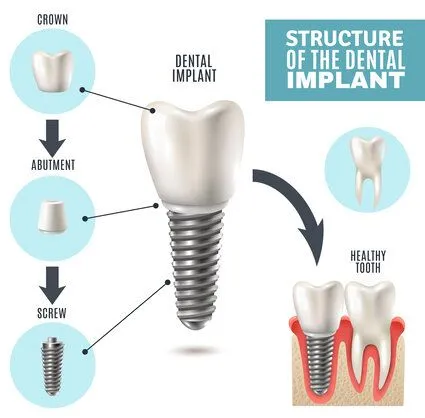
A dental implant is composed of three main parts: the implant post, the abutment, and the prosthetic crown.
- Implant Post: This is the foundation of the dental implant, typically made of titanium or titanium alloy, which is biocompatible and integrates well with the jawbone. It effectively becomes the root of the new tooth.
- Abutment: Once the implant post has fully integrated with the jawbone, an abutment is attached to it. The abutment is a small connector piece that protrudes above the gum line and serves as a link between the implant post and the restoration. It can be made from various materials, including titanium, gold, or ceramic.
- Implant Restoration: The final part of the dental implant is the restoration (replacement tooth), which is custom-made to match the shape, size, and color of a patient's natural teeth. The most common materials used for implant restorations include zirconia and various ceramics. Each material has its own advantages and is chosen based on specific patient needs and the location of the implant.
THE IDEAL IMPLANT CANDIDATE
While a thorough evaluation by our implant dentists in Narberth, PA is essential to determine if a patient is a suitable candidate for dental implants, the ideal patient will have:
- Good General Health: Candidates should be in overall good health to undergo the surgical procedure required for dental implants. Certain medical conditions, such as uncontrolled diabetes, heart disease, or autoimmune disorders, might complicate the healing process and require special consideration.
- Sufficient Jawbone Density: Adequate jawbone density is crucial for the success of dental implants, as the implant posts need a solid foundation for osseointegration. Patients with significant bone loss may need bone grafting procedures before implants can be placed.
- Healthy Gums: Healthy gums are essential because periodontal disease can affect the stability and success of the implant. Candidates should have good oral hygiene and be free of active gum disease.
- Non-Smokers: Smoking can impair healing and increase the risk of implant failure. Non-smokers or those willing to quit smoking during the implant process are better candidates for successful implant integration.
- Commitment to Oral Hygiene: Candidates should be committed to maintaining excellent oral hygiene and regular dental visits to ensure the long-term success of their implants. Proper care and maintenance are vital to prevent infections and other complications.
CONTACT US
If you’re interested in learning more about the possibilities of dental implants at Main Line Center for Dental Excellence, please contact us or give us a call at (610) 664-6061. Give our Narberth, PA dental office a call today!